SAVED
File name .JPG
File alt. text
Image should be px wide x px tall.
Select Image
home - Small Bowel - Coeliac Disease - Coeliac Complications Written by Dr Sebastian Zeki

Coeliac Complications

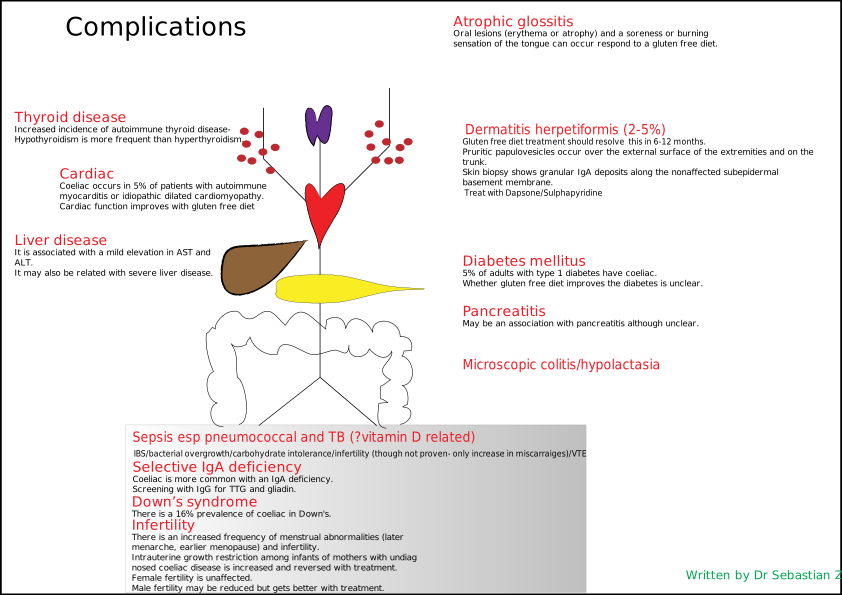
IBS/bacterial overgrowth/carbohydrate intolerance/infertility (though not proven- only increase in miscarraiges)/VTE Written by Dr Sebastian Zeki Sepsis esp pneumococcal and TB (?vitamin D related) InfertilityThere is an increased frequency of menstrual abnormalities (later menarche, earlier menopause) and infertility.Intrauterine growth restriction among infants of mothers with undiag-nosed coeliac disease is increased and reversed with treatment.Female fertility is unaffected.Male fertility may be reduced but gets better with treatment. Down’s syndromeThere is a 16% prevalence of coeliac in Down's. Selective IgA deficiencyCoeliac is more common with an IgA deficiency.Screening with IgG for TTG and gliadin. PancreatitisMay be an association with pancreatitis although unclear. Complications Atrophic glossitisOral lesions (erythema or atrophy) and a soreness or burning sensation of the tongue can occur respond to a gluten free diet. Thyroid diseaseIncreased incidence of autoimmune thyroid disease- Hypothyroidism is more frequent than hyperthyroidism. CardiacCoeliac occurs in 5% of patients with autoimmune myocarditis or idiopathic dilated cardiomyopathy.Cardiac function improves with gluten free diet Diabetes mellitus5% of adults with type 1 diabetes have coeliac.Whether gluten free diet improves the diabetes is unclear. Liver diseaseIt is associated with a mild elevation in AST and ALT.It may also be related with severe liver disease. Microscopic colitis/hypolactasia Dermatitis herpetiformis (2-5%) Gluten free diet treatment should resolve this in 6-12 months. Pruritic papulovesicles occur over the external surface of the extremities and on the trunk. Skin biopsy shows granular IgA deposits along the nonaffected subepidermal basement membrane. Treat with Dapsone/Sulphapyridine

Related Stories

Inherited Predisposition to Increased Systemic Inflammation Predicts a Broad Class of Disease Phenotypes

One mechanism, two diseases: Involvement of enzyme-substrate complexes in the pathogenesis of celiac disease and rheumatoid arthritis

Predictors of Progression to Villous Atrophy in Children with Type 1 Diabetes and Potential Celiac Disease

Immunoproteomic Profiling of Autoantibodies and Antibodies against Infectious Agents in Autoimmune Diseases

FOXP3 Stability-Adaptation Paradox: Reshaping Treg-Based Therapies for Intestinal Diseases